

Iran Conflict Threatens India's $1.2 Billion Basmati Rice Export Trade
With Iranian importers having placed substantial advance orders just weeks before hostilities erupted, India's most prized agricultural commodity now stands at the center of a growing geopolitical and economic crisis.

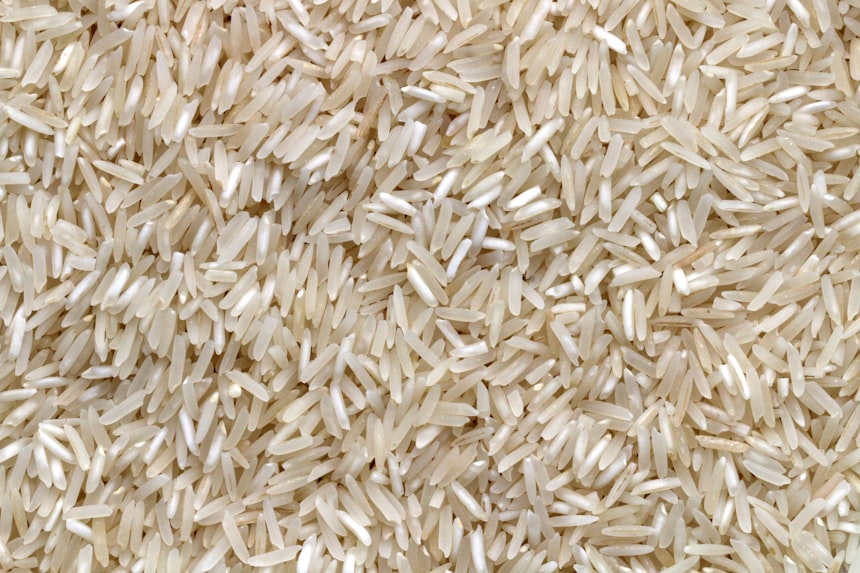
India's basmati rice exporters are facing a moment of acute uncertainty as the Iran conflict threatens to unravel trade ties worth more than $1.2 billion annually. The fragrant long-grain rice, prized across the Persian Gulf and South Asia, has long found its most loyal overseas customer in Iran — a market that now teeters on the edge of trade paralysis.
According to exporters and industry insiders, Iranian buyers had placed unusually large advance orders in the two months immediately before the conflict began. Those orders — representing tens of millions of dollars in contracted goods — now hang in limbo, as shipping lanes face uncertainty, financial transactions grow complex, and both governments wrestle with the diplomatic fallout.
Key Trade Figures at a Glance
"The orders were coming in at a rapid pace — buyers were clearly stocking up in anticipation of something," said one New Delhi-based exporter who asked to remain anonymous. "Now we're stuck. Vessels are being rerouted, letters of credit are getting rejected, and nobody knows when this will stabilize."

Iran has historically absorbed roughly 40 percent or more of India's total basmati exports. The relationship stretches back decades — Iranian cuisine's deep affinity for fragrant, long-grain rice created an almost insatiable demand that Indian farmers in states like Punjab, Haryana, and Uttarakhand have reliably met. The trade had, in many ways, become a pillar of rural prosperity in India's northern rice belt.
But the latest escalation of tensions — bringing with it the prospect of wider regional instability, reinforced sanctions, and disruption to Gulf shipping routes — has rattled an industry that was already navigating the aftereffects of global supply chain stress and currency volatility.
"Buyers were clearly stocking up in anticipation of something. Now we're stuck — letters of credit are getting rejected, and nobody knows when this will stabilize."— Senior Exporter, All India Rice Exporters Association
The All India Rice Exporters Association (AIREA) has called on the Ministry of Commerce to urgently intervene and explore alternate payment corridors, including rupee-rial arrangements that have been tested in previous sanction cycles. Trade officials, meanwhile, have signaled they are monitoring the situation closely, but have yet to announce specific relief measures for affected exporters.
Compounding the challenge is the timing. Basmati harvests from the autumn crop cycle had recently reached warehouses across Punjab, and exporters had leveraged the strong pre-conflict demand from Iran to lock in favorable prices. With demand now frozen, there are concerns about warehouse saturation, price corrections, and farmer incomes, particularly among smaller growers who depend heavily on export premiums.
Analysts note that India has navigated Iran-related trade disruptions before — notably during the 2018 US sanction regime under the Trump administration, when bilateral trade volumes fell sharply before recovering through alternative mechanisms. However, the current conflict scenario introduces a new variable: physical insecurity of trade routes and the potential for broader Gulf disruption, which prior sanction episodes did not entail.
"Sanctions were manageable — we found workarounds with rupee accounts and barter-style arrangements," noted a commodity analyst at a Mumbai-based agri-research firm. "But if the Persian Gulf itself becomes a contested shipping zone, that's a fundamentally different problem. No workaround fixes geography."
For now, exporters are adopting a wait-and-see approach, hoping for a de-escalation that would allow them to execute the pending orders. Several have begun quietly sounding out alternative buyers in Saudi Arabia, the UAE, and emerging markets in Africa and Southeast Asia — though those markets traditionally prefer different rice varieties and are unlikely to absorb Iranian-scale volumes on short notice.
The situation also carries political dimensions. Basmati rice has for decades served as a quiet diplomatic bridge between India and Iran — a trade built on mutual economic need that survived sanctions, diplomatic tensions, and changing geopolitical alignments. Its disruption now is, in its own way, a measure of how serious this conflict has become.
Whether India's exporters can weather this storm — as they have previous ones — may ultimately depend on how long the conflict lasts, and how quickly a semblance of commercial normalcy returns to the region's trade arteries.







0 Comments